
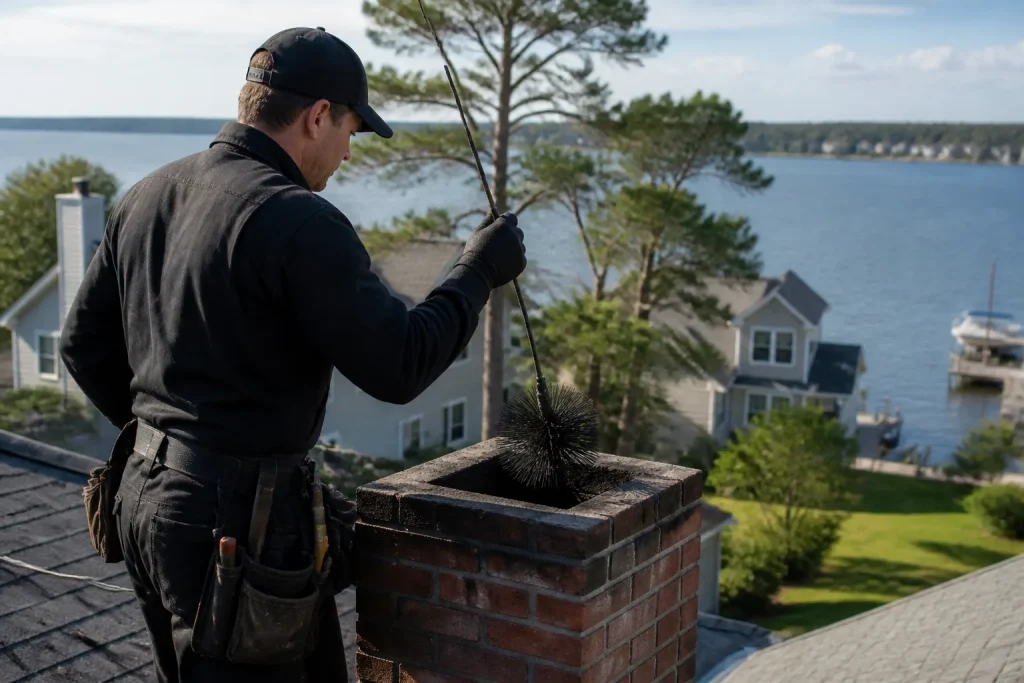
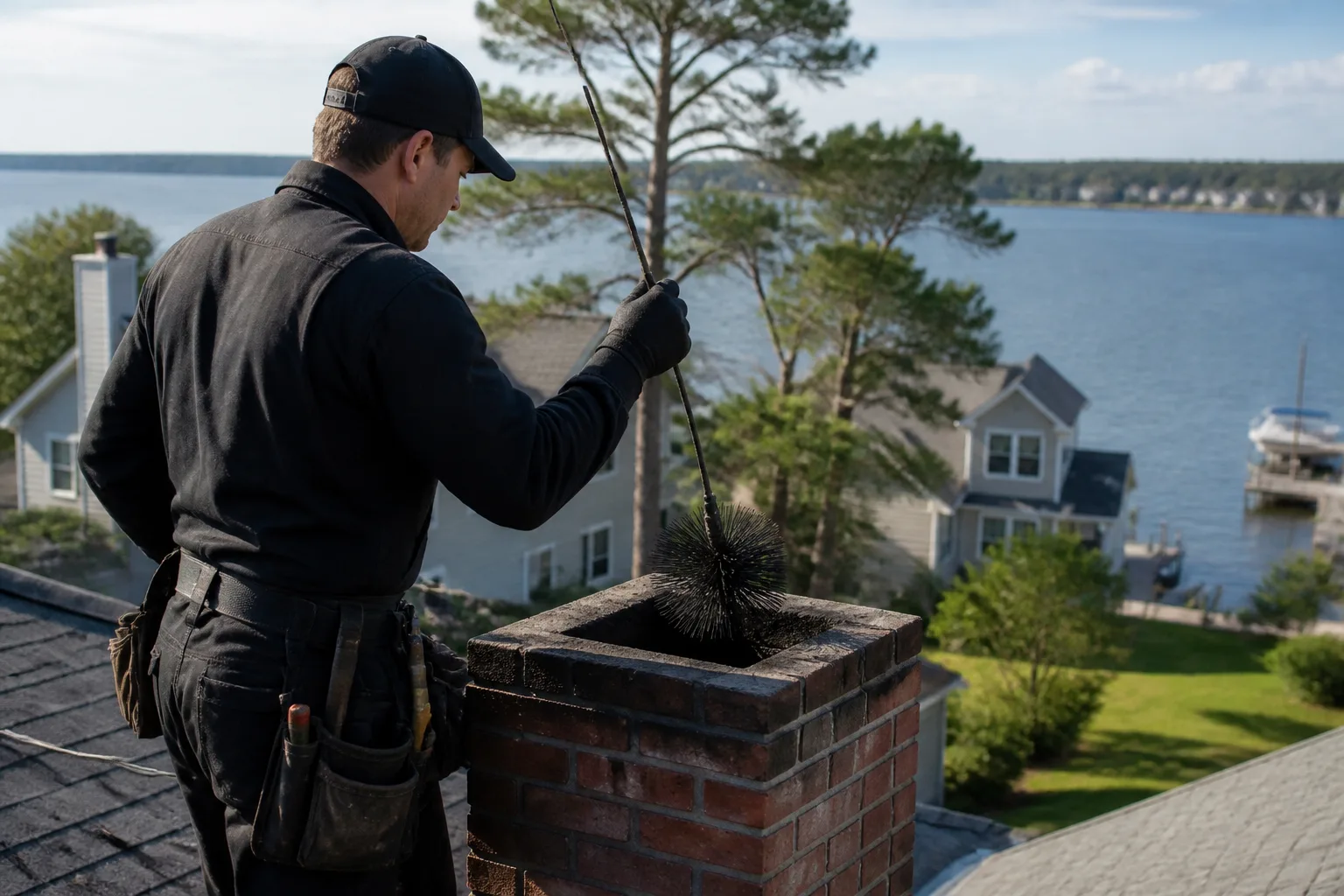
Top Signs You Need Chimney Cleaning Service – Don’t Ignore These
Most homeowners schedule a chimney cleaning when something looks wrong. Soot on the firebox, smoke rolling into the room, a smell that won’t quit. That logic feels sensible, and it misses the most dangerous condition a flue can develop. Glazed creosote, the hardened, tar-like deposit that fuels chimney fires, forms with almost no visible warning from the firebox. A chimney can smell fine, draw well, and still be unsafe to burn. Here’s what actually tells you it’s time, including the signals you can’t see.
Visible Signs You Need a Chimney Cleaning
Some warning signs are plain once you know what to look for. These are the sensory cues that prompt most Clear Lake homeowners to pick up the phone, and each one points to a real condition inside the flue rather than simple cosmetic dirt.
- Soot falling into the firebox or onto the hearth. Flakes of black soot mean deposits have built up on the flue walls and are shedding. A light dusting after a fire is normal, but a noticeable accumulation between burns is not.
- Smoke spilling into the room instead of rising. A flue choked with creosote narrows the path for exhaust. If smoke curls back into the living space when you open the damper, the chimney is telling you it can’t move air the way it should.
- A strong, acrid odor when the fireplace is not in use. Creosote and soot smell worse in warm, humid weather. A fireplace that reeks on a mild day is holding more deposit than it should.
- A black, glassy coating on the flue walls. This is the serious one. Glazed creosote looks like hardened tar and does not brush away with ordinary cleaning. It requires a different approach, which we’ll get to below.
- Dark staining around the firebox or damper. Staining suggests smoke has been escaping where it shouldn’t, often a sign of restricted draft.
If any of these sound familiar, the next step is a proper look inside the flue, not a guess. That’s what a chimney sweep provides, and it’s the only way to confirm what’s actually there. From inspection to repair, we handle the whole arc ourselves, so nothing gets flagged and then left for someone else to fix.
The Invisible Hazard: Creosote Stages You Can’t See
Here’s the part that changes how you should think about scheduling. Creosote builds in stages, and the stage that causes chimney fires is nearly invisible from the firebox. A sweep who climbs the flue and inspects with a camera sees it. You, standing in your living room, will not.
- Stage one: soot and flaky ash. Soft, dusty, and easy to brush away. This is normal early buildup and the least dangerous stage.
- Stage two: hardened crust. A brittle, popcorn-like layer that clings to the flue walls. It’s more stubborn but still manageable with proper tools.
- Stage three: glazed creosote. A dense, tar-like coating baked onto the flue by repeated hot burns of wet or resinous wood. It is highly flammable, nearly odorless, and invisible from below. This is the condition that turns a routine fire into a chimney fire.
Because stage three gives you no obvious warning, symptoms alone are an incomplete way to decide when to clean. In our experience, the clearest predictor of dangerous buildup isn’t how the chimney looks. It’s how the fireplace has been used. A Chimney Sweep Clear Lake visit with a camera inspection tells you the actual stage, and that matters far more than a visual glance.
Why Usage Hours Matter More Than Appearance
A fireplace used only ten times a season can still accumulate dangerous deposits. This is the usage-hour logic most homeowners never hear, and it explains why a “clean-looking” chimney in Clear Lake can be a real risk.
Creosote forms fastest when wood burns cool and slow. Damp wood, a choked damper, a smoldering fire left to burn down overnight, or a gas log set running on low all produce more creosote per hour than a hot, efficient fire. That means a household that burns a handful of fires but lets them smolder can build up glaze faster than a household burning twice as often at higher temperatures. The temperature of the burn, not just the number of fires, drives the deposits.
That’s why we ask about how you burn, not just how often:
- Do you burn seasoned hardwood, or whatever’s on hand?
- Do you let fires smolder overnight, or burn them hot and let them die down?
- Is the damper fully open during burns?
- Do you have a gas log set that runs at low flame for long stretches?
Seasoned, dry wood and hot burns reduce creosote. Smoldering and wet wood accelerate it. A sweep scheduled around your actual burning habits catches glaze before it hardens. That’s the professional approach, and it’s why we specify materials like Olympia Chimney and Copperfield components by name when a flue needs attention rather than swapping in anonymous parts.
The Summer Signal: Musty Odors in a Humid Climate
Clear Lake’s humid Gulf Coast summers turn a fireplace into a moisture trap. If your fireplace smells musty or earthy in warm weather, that’s a different signal than the acrid creosote smell. It points to moisture getting into the chimney, not just dirt.
Where does the moisture come from? A missing or damaged cap lets rain straight down the flue. A cracked crown traps water at the top of the structure. Once moisture mixes with soot and creosote, it produces that musty odor and, over time, can soften mortar and encourage deterioration. A summer smell is easy to dismiss as “just the fireplace.” In our experience, it’s often the first sign of a cap or crown problem, and both are worth checking before the burning season returns.
If the smell shows up in summer, we look at the top of the chimney as much as the flue. That’s the work covered under chimney cap & crown service, and it’s a repair we can complete as part of the same visit.
Animal Intrusion: The Uncapped Flue Problem
An open flue is an invitation. In the Clear Lake area, uncapped chimneys draw birds, squirrels, and other wildlife looking for shelter, and the signs they leave behind are specific.
- Scratching or flapping sounds from the chimney, especially at dawn or dusk.
- Nesting material like twigs, grass, or leaves dropping into the firebox.
- Feathers, droppings, or debris on the smoke shelf or hearth.
- A new, animal-like odor that appears suddenly, distinct from creosote.
Beyond the mess, a nest blocks the flue and creates a fire and carbon monoxide hazard. The fix is a proper cap, and it’s one of the most cost-effective preventive steps a Clear Lake homeowner can take. A cap keeps wildlife, rain, and debris out while letting smoke escape. When we install one, we use professional-grade components such as Gelco and Famco ventilation parts because a cap that rusts or blows off in a storm doesn’t protect anything.
A Practical Annual Calendar for Clear Lake Homeowners
Forget a symptom-only checklist. The most reliable way to protect your chimney is to schedule around how you use it, and to build in one inspection a year whether or not anything looks wrong.
- Late summer, before the first burn. Schedule your sweep and inspection before you light the season’s first fire. This clears summer buildup, catches moisture and animal problems, and confirms the flue is sound before you depend on it.
- After an unusually heavy season. If you burned far more than usual, or burned a lot of damp wood, book a follow-up. Creosote stage matters more than the calendar when usage spikes.
- After any storm or severe weather. A cracked crown, a loose cap, or displaced masonry shows up after high wind and heavy rain. A quick look prevents small damage from becoming chimney repair.
- Whenever your usage patterns change. Switching to a gas log set, burning more smoldering fires, or noticing a new smell all warrant an earlier inspection.
One annual inspection, timed before the season, covers the rest. There’s a real question here: what actually happens if you skip it? The honest answer is that stage-three glaze and cracked liners don’t announce themselves. They sit quietly until a fire or a carbon monoxide problem forces the issue. That’s why we build documentation into every visit, so you know exactly what’s happening inside your chimney before the season starts.
When to Call a Pro
Some things are worth a call rather than a guess. Call us if you notice smoke spilling into the room, a sudden strong odor, animal sounds in the flue, or any glazed coating on the flue walls. Those point to conditions a homeowner can’t safely diagnose or fix from the firebox. Sweeping and inspecting are the job of a trained specialist, and glazed creosote in particular requires the right tools and technique; it is not a do-it-yourself task, and we’d rather you didn’t try.
If it’s a repair the sweep uncovers, we don’t stop at the diagnosis. Our full scene covers fireplace repair, cap and crown work, and HeatShield resurfacing, which restores flue integrity without a full rebuild. Every technician works chimneys and fireplaces exclusively. That focus is why we catch what a general handyman would miss, and why we can fix it in the same service relationship instead of handing you off. When a flue needs a liner, we specify DuraFlex by name because what goes into your chimney matters.
The Bottom Line
The signs that matter most are often the ones you can’t see. Visible cues like soot, smoke spillage, and odor are worth acting on, but glazed creosote and cracked liners hide until an inspection finds them. Schedule your cleaning around usage rather than waiting for a symptom, and let a camera inspection show you the real condition of the flue. Our technicians have up to 15 years of experience, and we install and specify professional-grade DuraFlex, HeatShield, Gelco, Olympia Chimney, Famco, and Copperfield materials because they hold up the way they should.
If you’re in Clear Lake and need help, Chimney Sweep Clear Lake offers free estimates. Call (855) 726-7805. We answer 24/7. Fast dispatch from 7am to 7pm, Sunday through Friday.
Frequently Asked Questions
Once a year is the standard baseline, and it’s the right starting point for most Clear Lake homes. If you burn often, burn damp or resinous wood, or let fires smolder, you may need it sooner because creosote can reach the hazardous glazed stage faster than the calendar suggests. An inspection tells you whether you’re due. Call (855) 726-7805 for an exact quote; estimates are free.
Not reliably. You can spot soot, smoke spillage, and staining from the firebox, but glazed creosote and liner cracks are nearly invisible from below and only show up with inspection tools. That’s why a visual glance isn’t enough to rule out danger. Call (855) 726-7805 for an exact quote; estimates are free.
Glazed creosote looks like hardened tar baked onto the flue walls, and it’s highly flammable. It forms when fires burn cool and slow, and because it’s nearly odorless, it can build up with no warning you’d notice. A sweep with a camera confirms the stage. Call (855) 726-7805 for an exact quote; estimates are free.
A musty summer smell usually means moisture is getting into the flue, often through a missing or damaged cap or a cracked crown. Mixed with soot, that moisture produces the earthy odor. It’s a sign to check the top of the chimney, not just the firebox. Call (855) 726-7805 for an exact quote; estimates are free.
Written by the team at Chimney Sweep Clear Lake.
Need Chimney Cleaning Help?
Call Chimney Sweep Clear Lake - the local pro we connect you with is licensed and insured, here with fast help in Clear Lake.
(855) 726-7805