
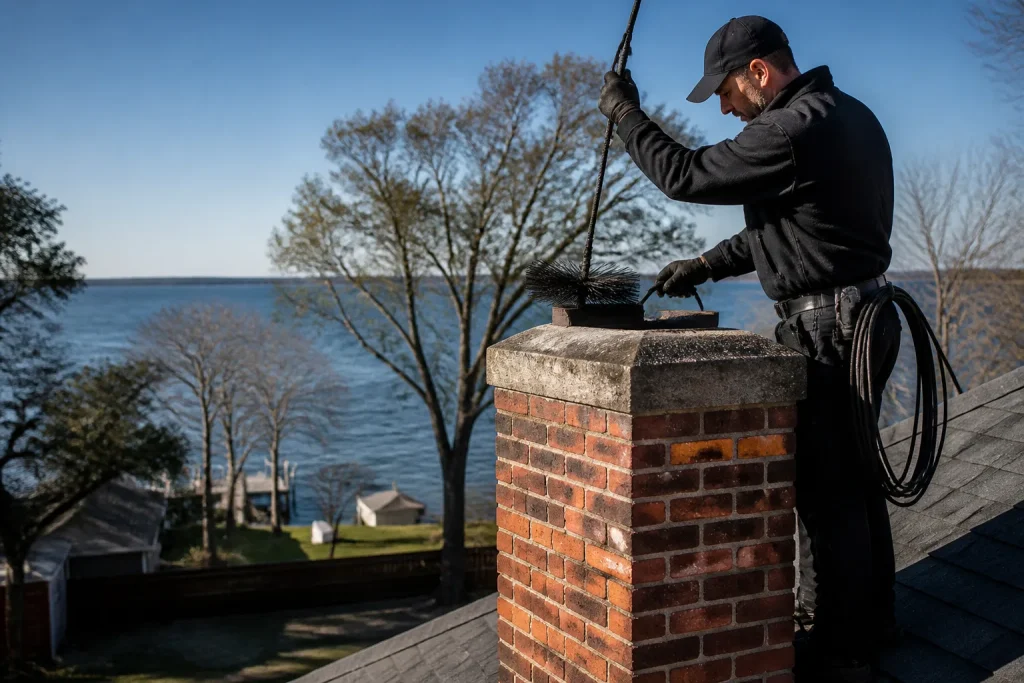
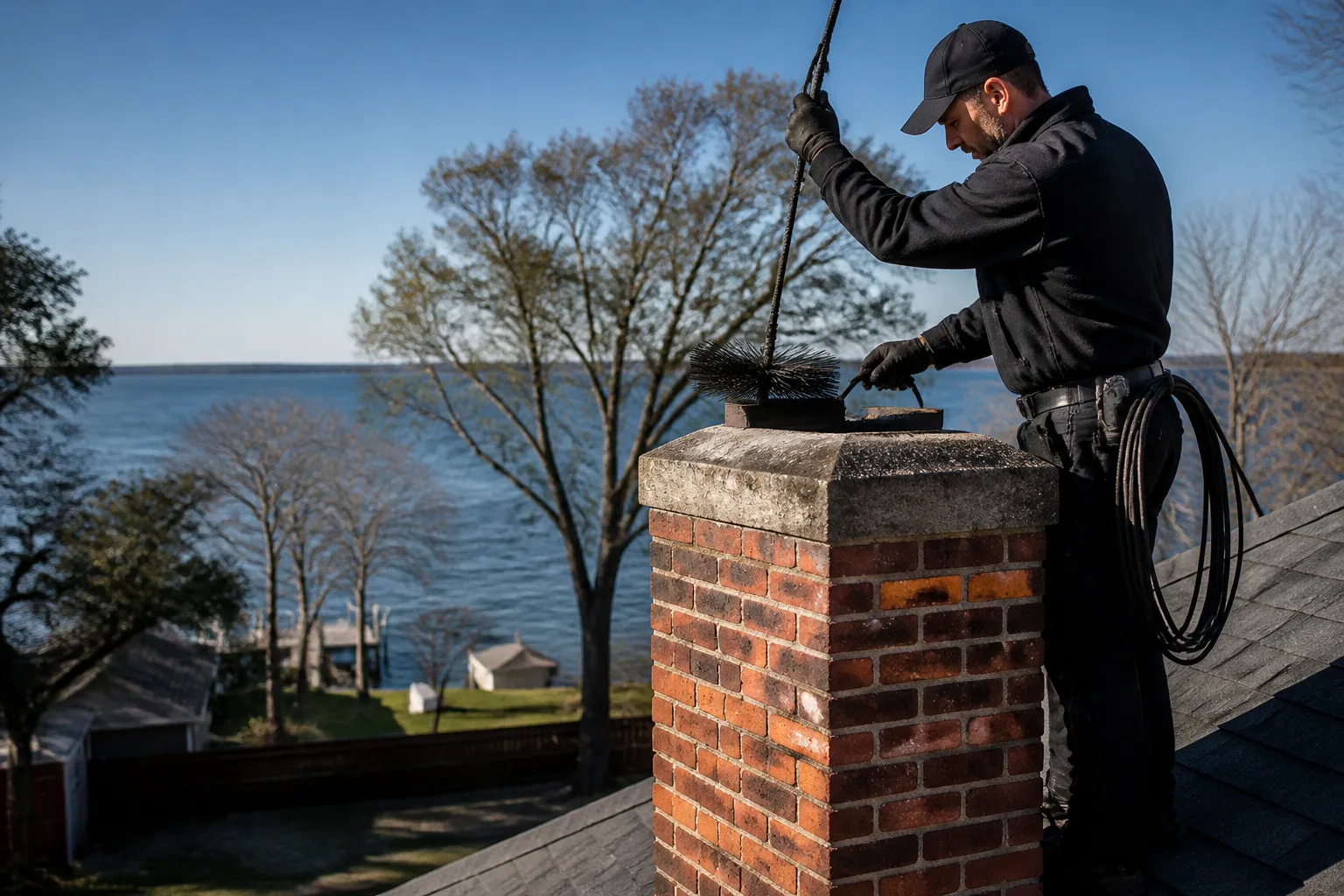
Emergency Chimney Sweep Near Me: What Clear Lake Homeowners Should Do First
Most chimney emergencies give you a warning you can hear. A chimney fire doesn’t always roar like a freight train. Often it’s a low crackle, a deep hum in the flue, or a stovepipe that’s suddenly too hot to touch. Homeowners who pause to “see if it gets worse” are the ones who end up with cracked masonry and a rebuild instead of a sweep. Here’s the sequence to follow when something in your Clear Lake chimney goes wrong.
If you’d rather not sort it out yourself, call (855) 726-7805. We answer 24/7. Fast dispatch from 7am to 7pm, Sunday through Friday.
What Should You Do First in a Suspected Chimney Fire?
If you suspect a chimney fire, close the damper if you can reach it safely, get everyone out of the house, call 911, and then call a chimney sweep. That order matters: the fire department addresses the immediate fire, and the sweep handles the inspection and repair that follow. Don’t put water on it, don’t try to climb up and look, and don’t wait for flames to confirm what you already sense.
Here’s the full sequence in order:
- Close the damper. This cuts oxygen to the flue and slows the burn. Do it from the room, with a poker or handle. If the damper is stuck or the firebox is too hot to approach, leave it and move on.
- Get everyone out. Every person and pet out of the house. No gathering belongings.
- Call 911. Even if you think the fire is out. The fire department can check the flue and attic from the outside and confirm nothing is still burning inside the structure.
- Then call a chimney sweep. Not before. The fire department clears the structure, and the sweep inspects what the fire left behind.
What does a chimney fire look like from inside the house? Puffy smoke from the top of the chimney, a roaring or humming sound, a strong hot smell, or a flue pipe glowing. Any one of those means act now. In our experience, homes around Clear Lake with older brick chimneys are the ones where a slow smoldering fire can work into the mortar joints before anyone notices.
How Is a Chimney Fire Different From a CO or Blockage Emergency?
These are three different problems with three different first steps. A chimney fire means close the damper, evacuate, call 911. A carbon monoxide alarm means evacuate, call 911, and do not re-enter. A sudden smoke rollout or blockage means stop using the fireplace, ventilate, and call a sweep for an inspection.
The distinction matters because the wrong response can waste the minutes that count:
- Chimney fire: audible roar or hum, hot stovepipe, smoke or sparks at the top. Close the damper, evacuate, call 911, then a sweep.
- Carbon monoxide concern: a CO alarm going off, or headaches, dizziness, and nausea in the room with the fireplace. Evacuate immediately, call 911, and do not re-enter until the fire department clears the home. CO is odorless and colorless, so trust the alarm.
- Smoke or blockage: smoke rolling back into the room, weak draft, or a smell of soot after a fire. Stop burning, open a window, and call for an inspection. A blocked or partially blocked flue with a fire still going is genuinely dangerous, but you have more time than in a CO event.
Knowing which one you’re facing helps you make the right call in the first 30 seconds. When you call us, tell us what you’re seeing and hearing. We can usually tell where things stand before we arrive.
What Does “Emergency Chimney Sweep” Actually Mean?
An emergency chimney sweep means a same-day visit to assess the chimney, not necessarily a full sweep on the spot. A technician can safely inspect the flue, check for damage, and confirm whether the chimney is safe to use. What can’t happen safely on a rushed visit is the entire repair, which usually needs the chimney to cool down completely and often needs parts on hand.
Here’s what a same-day call in Clear Lake can do:
- Inspect the flue, firebox, and chimney exterior for fire damage or blockage
- Run a camera to look for cracks, separation, or creosote glazing
- Confirm whether the chimney can be used after the visit
- Document the condition with photos for you and your insurer
- Quote the actual repair or sweep work in writing
What it can’t do: a full sweep while the chimney is still hot, structural repair in a single visit, or a definitive call on the liner until a proper inspection is done. We specify materials by name because what goes into your chimney matters. If the diagnosis points to a liner, we work with chimney sweep and repair-grade products like DuraFlex liner systems and HeatShield resurfacing. From inspection to repair, it’s handled by one specialist team, and the written estimate sets the final price before any work begins.
Why Does a Post-Fire Level 2 Inspection Matter?
After any chimney fire, a Level 2 inspection is required before the fireplace is used again. NFPA 211 calls for it because a fire you couldn’t see can crack the flue tile, warp a metal liner, or open a gap in the mortar that lets gases escape. Using the fireplace before that inspection is both a safety risk and a code issue. An inspector can read the flue visually and with a camera and tell you whether the chimney is sound.
Clear Lake homes with older brick chimneys are the ones where the post-fire inspection tends to be most revealing. Brick and mortar move slightly under fire heat, and a hairline crack that was harmless before can open into a route for carbon monoxide into the living space.
This is where repair capability separates companies. Some sweeps flag the problem and hand you a referral. We do the inspection and the repair: cap and crown work, fireplace repair, and structural repair, all by the same company that swept. That matters when the chimney needs resurfacing. HeatShield restores the flue interior without a full rebuild, which extends the life of the chimney and avoids demolition. If you need a Level 2 inspection on its own, we offer that as a standalone service with a documented report you can act on or share with your insurer.
What Should You Photograph Before the Technician Arrives?
While you’re waiting, document what you can see. Photograph the firebox, the damper, the stovepipe, the top of the chimney if it’s visible from the ground, and any soot or smoke damage to walls or ceiling. Note the approximate time you noticed the problem. This record helps with the inspection and supports an insurance claim if one becomes necessary.
Keep a short list as you document:
- The fireplace or stove you were using, and whether it’s wood or gas
- When you last had the chimney swept and who did it
- What you saw first: smoke, sound, smell, or an alarm
- Any photos of the firebox interior, damper, and the chimney cap
- Whether you used the fire extinguisher or closed the damper, and when
Don’t clean up soot or debris before the technician arrives. The pattern of deposit tells a story about how the fire burned, and it can point to where the flue failed. If you’re unsure what to capture, call and ask; someone on our team can walk you through it while you wait for fast dispatch from 7am to 7pm.
When Should You Call a Pro, and When Can It Wait?
Call a pro immediately for anything that smells like a chimney fire, sets off a CO alarm, or sends smoke into the room with a fire burning. If the smell is faint and the chimney hasn’t been swept this season, you can schedule a sweep before your next fire. In our experience, most Clear Lake homeowners who call in a panic turn out to have a soot-heavy flue or a loose cap, but the ones who wait on a real fire are the ones who pay for a rebuild.
A few signals that mean call now rather than later:
- Any sound like crackling or humming when the fire is burning
- A strong hot smell in the room when the fireplace is on
- Smoke backing into the room, especially if it’s new
- Visible cracks in the firebox or flue tile
- A missing or damaged chimney cap & crown that lets rain or animals in
If the fireplace is simply due for its annual sweep before the season, that’s routine. If something looks or smells wrong, that’s when to call. Our technicians have up to 15 years of experience, and every one of them works chimneys and fireplaces exclusively.
Related services in Clear Lake: If the diagnosis points to the firebox itself, see our fireplace repair page. For everything chimney-related, start at Chimney Sweep Clear Lake.
The Bottom Line
In a chimney emergency, the first 15 minutes matter more than which company you call. Close the damper, evacuate, call 911, then call a sweep. After any fire, a Level 2 inspection is required before the fireplace is used again. Document what you see, and don’t clean anything up before the technician arrives.
If you’re in Clear Lake and need help, Chimney Sweep Clear Lake offers free estimates. Call (855) 726-7805. We answer 24/7. Fast dispatch from 7am to 7pm, Sunday through Friday. Estimates are free, and the written estimate sets the final price.
Frequently Asked Questions
You may not see flames. A chimney fire often shows as a low crackle or hum, a hot stovepipe, puffy smoke at the chimney top, or a strong burning smell. Any one of those means call 911 first, then a sweep. Call (855) 726-7805 for an inspection once the fire department has cleared the home.
No. NFPA 211 requires a Level 2 inspection before the fireplace is used again. A fire can crack the flue tile or open a gap in the mortar that lets gases into the house. Call for the inspection before you burn again.
A chimney fire is a visible or audible event in the flue; a CO emergency is odorless and set off by an alarm or symptoms like headache and dizziness. Both mean evacuate and call 911. The difference is that after a CO event, do not re-enter until the fire department clears the home. Call (855) 726-7805 for the inspection that follows.
A same-day visit will inspect and confirm whether the chimney is safe to use, then quote the repair in writing. The full repair often needs the chimney to cool and parts on hand, so it’s scheduled afterward. Estimates are free, and we answer 24/7 at (855) 726-7805.
Written by the team at Chimney Sweep Clear Lake.
Need Chimney Cleaning Help?
Call Chimney Sweep Clear Lake - the local pro we connect you with is licensed and insured, here with fast help in Clear Lake.
(855) 726-7805