
Last updated November 24, 2026
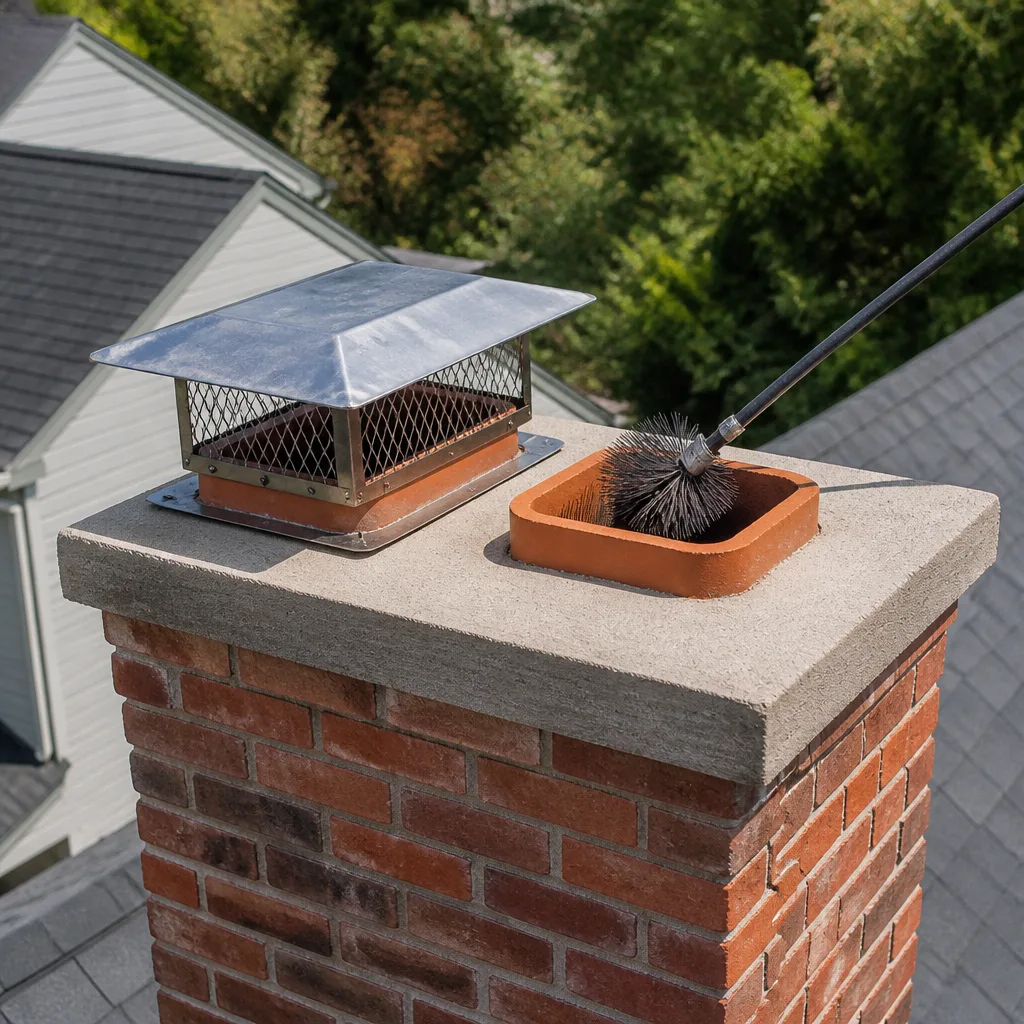 Sweep & inspection
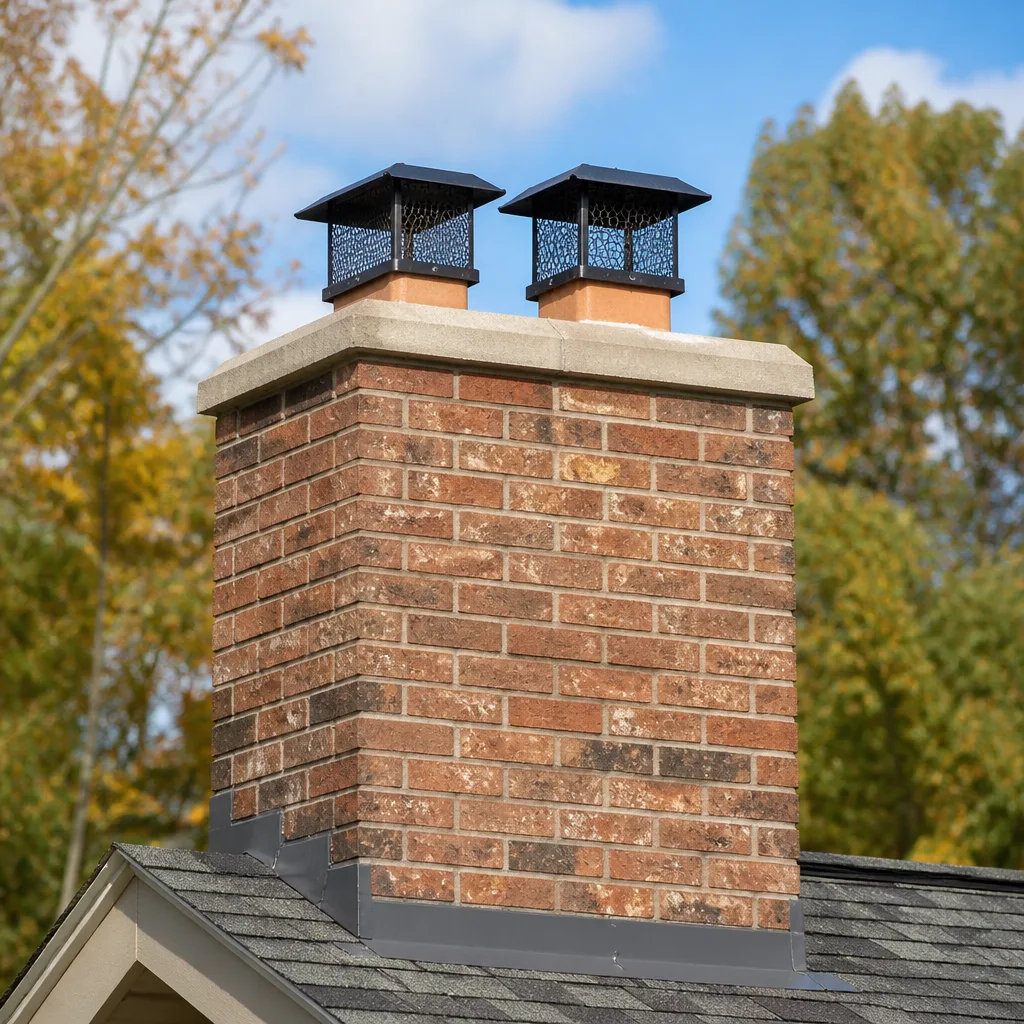 Caps & crowns
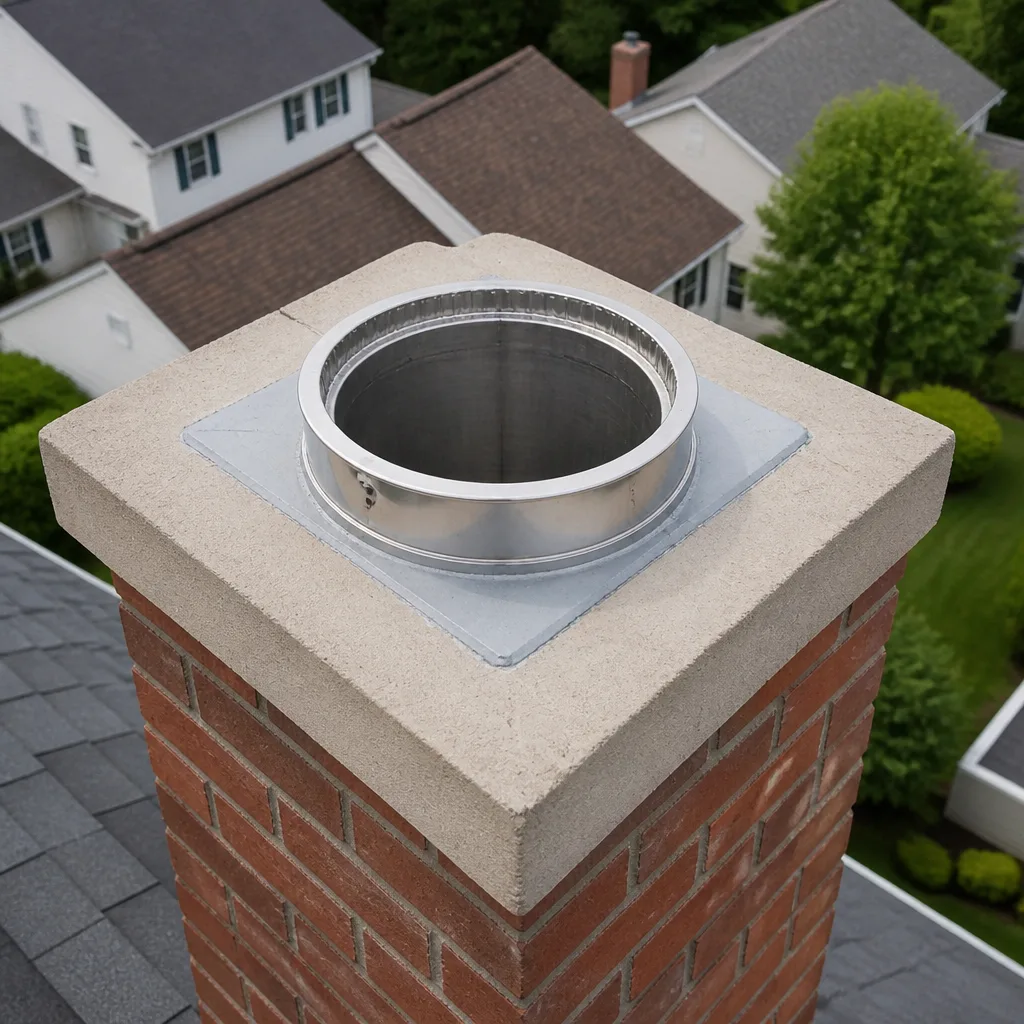 Flue relining
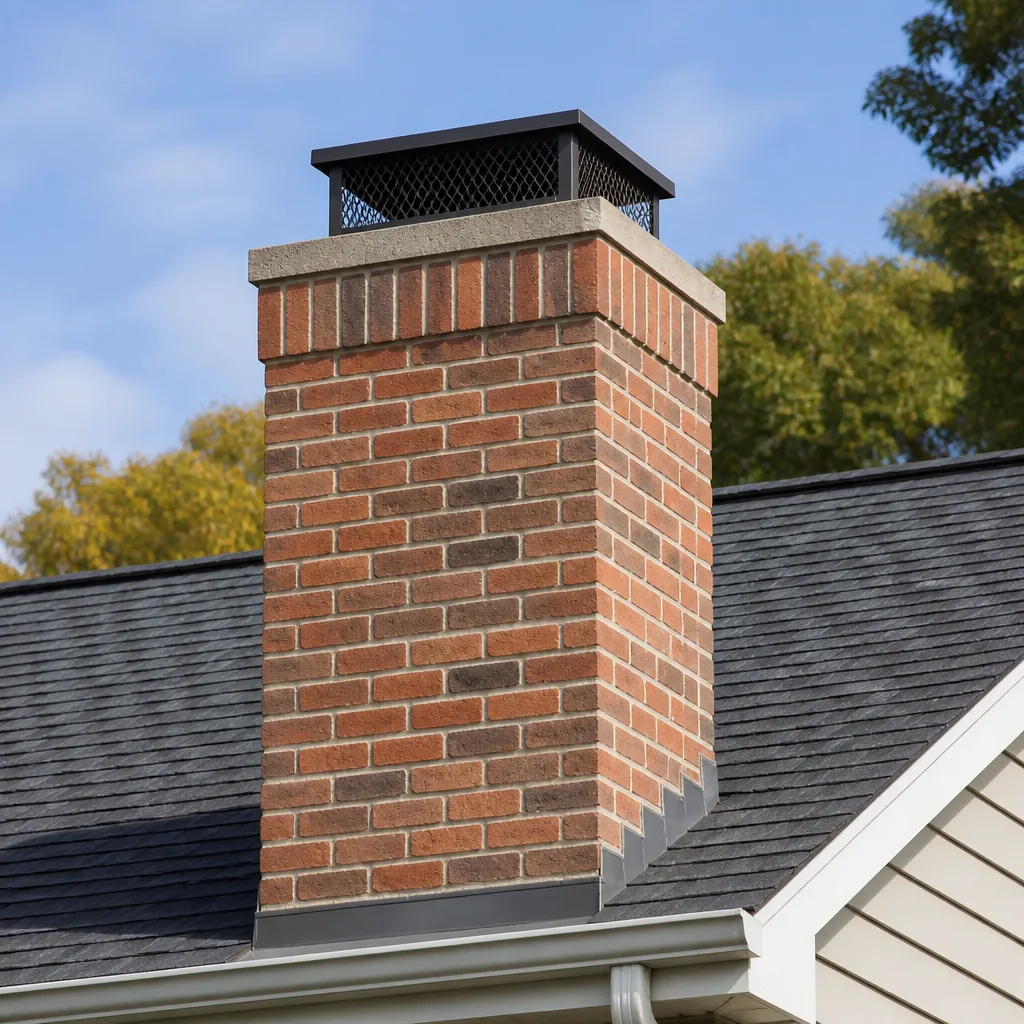 Masonry repair
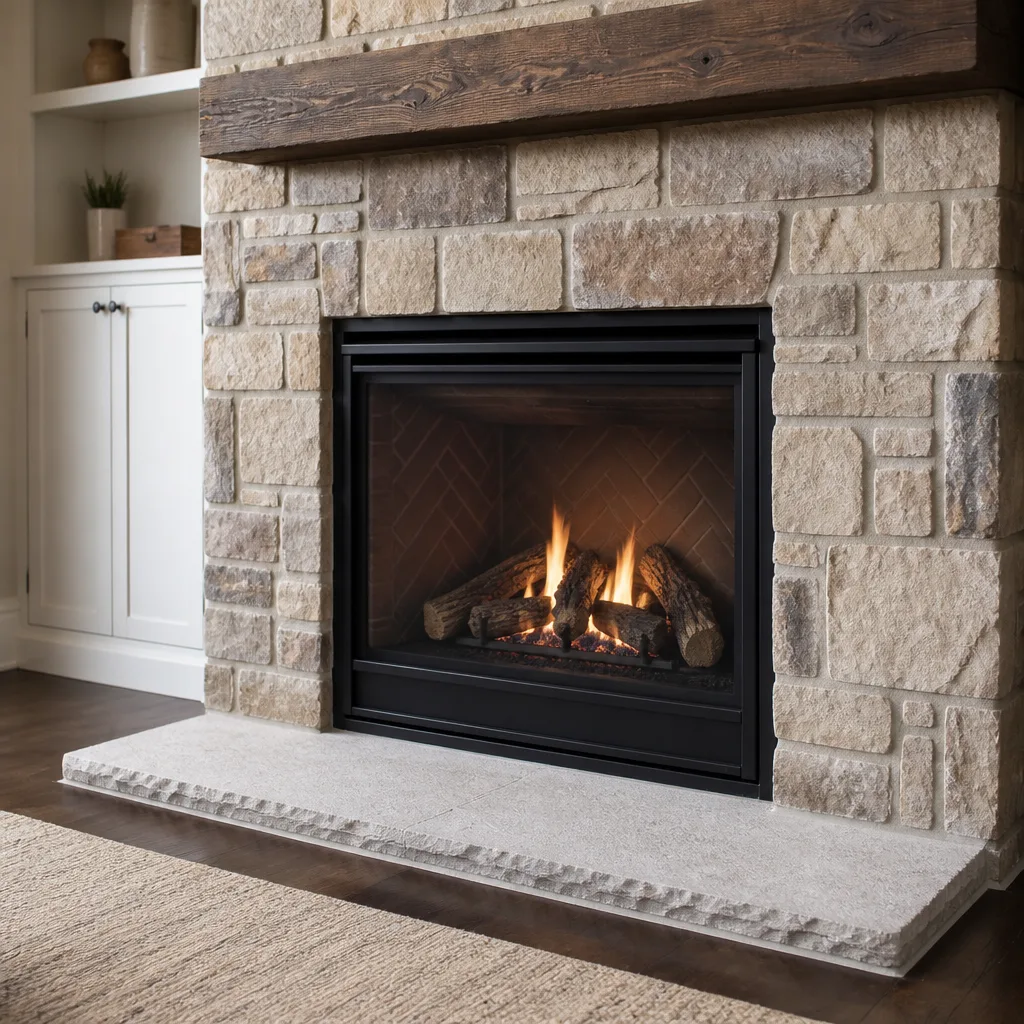 Gas fireplace service
Level 1 sweep and inspection to the NFPA 211 annual standard - flue, crown, cap, and flashing checked and photographed
Chimney sweep logs do not sweep chimneys. They loosen some creosote - which then falls where a brush and vacuum still have to collect it.
Chimney Cleaning Warning Signs: A Clear Lake Homeowner’s Reference Guide
A white stain running down the outside of your chimney isn’t cosmetic. It’s efflorescence, and it means water is already moving through your masonry. That stain usually shows up a full season before any interior damage becomes obvious. Most homeowners in Clear Lake never connect the two.
That’s the problem with how chimney warning signs get talked about. The ones we hear about are dramatic: roaring flames, heavy creosote smell, chunks of masonry on the driveway. The ones that actually matter show up quietly, months before a crisis, and they’re easy to dismiss as cosmetic or “normal.”
This guide is built around those quiet signs. You’ll learn what efflorescence, spalling, and rust staining each point to, how to tell a normal flue odor from the smell of advanced creosote, what smoke behavior in the firebox is telling you about draft, and which of these signs mean you should schedule service this week versus next season. We’ll also cover what you can safely check from the ground with a pair of binoculars, and where a professional needs to take over.
Quick Answer
The most important chimney cleaning warning signs in Clear Lake are: white efflorescence or rust staining on the exterior masonry (water intrusion), flaking brick faces (spalling), a strong acetone or asphalt smell instead of a normal smoky odor (advanced creosote), smoke that rolls back into the room instead of rising (draft or blockage), and visible soot or debris buildup at the firebox opening. Any of these means the chimney should be inspected before you burn again.
Styles & brands we work with
- Sweep & inspection
- Caps & crowns
- Flue relining
- Masonry repair
- Gas fireplace service
Table of Contents
- The Quiet Signs Most Homeowners Miss: Efflorescence, Spalling, and Rust
- Reading Your Flue’s Smell: Normal Odor vs. Creosote Warning
- What Smoke Behavior in the Firebox Is Telling You
- Roofline Warning Signs You Can Spot With Binoculars
- Which Warning Signs Need Same-Week Service and Which Can Wait
- Why Clear Lake’s Climate Produces Its Own Set of Signs
- What Happens During a Professional Inspection
- Common Mistakes to Avoid
The Quiet Signs Most Homeowners Miss: Efflorescence, Spalling, and Rust
Water is the most common cause of chimney damage, and it announces itself long before anything falls apart. The three exterior signs below are your earliest warning system. None of them are cosmetic, even though all three look cosmetic at first glance.
Efflorescence: The White Stain
Efflorescence is a white, powdery salt deposit that appears on brick and mortar when water moves through masonry and evaporates on the surface, leaving salts behind. On a Clear Lake chimney, that white streak or patch usually means water is finding a path in from above – a cracked crown, a failing flashing detail, or an uncapped flue. The stain itself is harmless. What caused it isn’t. If you see it, look up: the source is almost always higher on the chimney than the stain.
Spalling: When Brick Faces Flake
Spalling is the flaking or popping off of the brick’s outer face. It happens when brick stays saturated, then dries repeatedly. A spalled brick loses its protective skin, which lets in more water, which causes more spalling. It’s a cycle, and it gets worse faster than most homeowners expect. Spalling is also structural: the brick that’s flaking is doing less work holding up the chimney than the brick beside it.
Rust Staining: The Metal Tells on You
Rust streaks on the exterior of a chimney usually point to a rusted chase cover, cap, or damper assembly. In Clear Lake’s humid air, metal that lacks proper coating or has been continuously wet will rust, and rust means water is sitting somewhere it shouldn’t. A rusted chase cover is also failing as a cover. If you see rust, the metal part needs to be looked at, not just cleaned.
What These Three Signs Share
All three point to water getting into the chimney assembly from a specific path. Diagnosing which path matters, because the fix for a cracked crown is different from the fix for failed flashing. A standalone inspection maps the actual intrusion point, and the repair that follows is targeted rather than guesswork.
For more on how we handle water-related damage and exterior components, see our chimney cap & crown service page.
Reading Your Flue’s Smell: Normal Odor vs. Creosote Warning
A wood-burning fireplace smells like a fireplace. Slight char, slight smoke, especially on a humid day – that’s normal. The smell that isn’t normal is acetone, asphalt, or a sharp chemical tang. That odor usually means advanced creosote, and it’s one of the most reliable warning signs you’ll ever get.
Stage 2 and Stage 3 Creosote: What You’re Smelling
Creosote builds up in three recognizable stages:
- Stage 1: Soot and light flaky deposits. Normal after a season of burning. Sweeping removes it.
- Stage 2: Crusty, hardened deposits that look like dried tar. Starts to produce an off odor. Sweeping can remove it, but the flue needs a proper inspection to confirm it’s fully gone.
- Stage 3: Glazed, hardened creosote that’s essentially baked onto the flue wall. This is the stage with the acetone or asphalt smell. It doesn’t brush off, and it’s the stage most closely associated with chimney fires.
If your fireplace smells sharp when it’s warm outside and the firebox has been cold for weeks, that smell is coming from buildup that’s been heated and cooled repeatedly. It’s a sign to get the flue inspected before the next burn.
Gas Fireplaces Smell Differently
A gas fireplace shouldn’t produce a wood-smoke odor. A faint gas smell on startup is expected; a persistent odor isn’t. If you have a gas log set, note any change in smell and have it looked at. The warning signs for gas fireplaces live closer to the appliance than the flue.
Something Else in the Flue?
An animal smell, a dead-animal odor, or a sudden musty smell all point to something in the flue that doesn’t belong there – a nest, a bird, a squirrel. A capped chimney prevents most of this. If it’s already happened, an inspection identifies the blockage before you light a fire into it.
What Smoke Behavior in the Firebox Is Telling You
When you light a fire, watch the smoke for the first ten minutes. It’s one of the most direct diagnostics you have. Smoke that rises cleanly up the flue is fine. Smoke that rolls back into the room, hovers, or fills the firebox means the chimney isn’t pulling. There are three broad reasons a chimney doesn’t pull:
- Draft problems. This is often a temperature issue. Cold flues struggle to establish draft, especially in a mild climate where the fireplace sits unused for months. Pre-warming the flue with a rolled newspaper (carefully, briefly) often confirms the diagnosis without any tools.
- Creosote restriction. If the flue has narrowed with buildup, the smoke has nowhere to go. A restricted flue pulls poorly all the time, not just on cold starts.
- Damper failure. A damper that’s stuck partway, warped, or broken can block flow whether you know it or not. Sometimes the handle moves freely and the plate doesn’t.
The useful distinction is timing. If the smoke rolls back only on the first fire of the season and clears after a few minutes, that’s usually a cold-flue draft issue. If it rolls back every fire, all season long, that points to restriction or a failed damper, both of which need a professional look. If the smoke settles and drifts downward instead of rising, stop burning and get the flue inspected.
We install fireplace repair solutions for dampers and fireboxes alongside our sweep and inspection services, which means a failed damper gets diagnosed and addressed in one service relationship.
Roofline Warning Signs You Can Spot With Binoculars
You don’t need to get on the roof to check most of what matters. From the ground, with a pair of binoculars, you can see five things worth knowing about:
- Missing or damaged cap. A chimney cap is a metal hood over the flue. If it’s tilted, dented, or missing, water and wildlife get in. A cap that has blown off in a storm is one of the easiest warning signs to spot and one of the least expensive to fix.
- Cracked or missing crown. The crown is the concrete cap at the very top of the chimney that slopes water away from the flue. Cracks, spalling on the crown, or a visible gap around the flue opening all indicate water is getting in from the top.
- Failed flashing. Where the chimney meets the roof, metal flashing seals the joint. Lifted, rusted, or missing flashing is a roofing leak that shows up as chimney damage.
- Heavy staining or efflorescence. A white stain visible from the ground, especially at the top third of the chimney, is a sign worth noting.
- Displaced or missing bricks and mortar. A gap in the brickwork or crumbled mortar joints at the top of the chimney tells you the masonry is degrading.
What you can’t see from the ground is the inside of the flue. That’s where creosote stages, liner condition, and internal cracks live. An inspection with a camera covers what binoculars can’t.
Which Warning Signs Need Same-Week Service and Which Can Wait
Not every sign carries the same urgency, and knowing the difference saves money. Here’s how we sort the signs:
Same-Week Service
- A strong acetone or asphalt smell from the flue
- Smoke rolling into the room every fire, not just at start-up
- Visible rust or water stains inside the firebox
- A loose, tilted, or missing chimney cap or crown
- Loose or missing bricks in the chimney stack
- Any sign of a chimney fire (a roaring sound, dense smoke from the roof, discolored or blackened cap)
Can Wait for a Scheduled Appointment
- Light efflorescence with no interior signs
- A flue that smells faintly of last season’s fires
- Creosote buildup of a normal amount at the end of a season
- A gradual draft issue that only appears on the first cold start
- Minor staining on the crown with no visible cracks
If you’re not sure which list your chimney belongs on, that’s exactly what an inspection settles. Nothing is recommended unless the camera shows it and you’ve seen it yourself. If a problem can safely wait, we’ll say so.
Why Clear Lake’s Climate Produces Its Own Set of Signs
Clear Lake’s climate creates a specific pattern of chimney wear that’s worth recognizing. The seasons here swing between humid, warm months and brief, mild winters. That pattern matters because masonry damage in Clear Lake is driven by humidity and rain rather than by freeze-thaw cycling. A chimney that goes through wet-warm-dry cycles again and again accumulates moisture in ways a chimney in a colder, drier climate doesn’t.
What That Means for Water Intrusion
Efflorescence and spalling show up in Clear Lake chimneys routinely, often at lower levels of the chimney than you’d expect. The combination of consistent humidity and seasonal rain means a compromised crown or flashing leaks year-round, not just during the wet months. That’s why exterior water signs here are worth taking seriously even if the roof isn’t leaking.
What That Means for Creosote
In a mild climate, burn seasons are shorter, but that doesn’t mean buildup is slower. Wood that isn’t fully seasoned produces more creosote per fire, and a mild climate can tempt homeowners to burn wood that hasn’t had time to dry. A flue that’s only burned a few times a year can still reach stage 2 buildup over a few seasons.
What That Means for Off-Season Odors
Clear Lake’s humid summers make the “smells bad in July” complaint common. A flue that wouldn’t smell in a dry climate will smell here, because humidity pulls creosote odors out of the buildup. If the smell is sharp, it’s not just humidity. Get the flue checked.
What Happens During a Professional Inspection
An inspection is how the quiet signs get connected to their cause. Here’s how ours works:
- Exterior check. Cap, crown, flashing, brickwork, and staining viewed from the roof and ground.
- Firebox and damper check. Looking at the firebox masonry, damper operation, and hearth for signs of prior overheating or water intrusion.
- Camera inspection of the flue. A camera run down the flue shows creosote stage, liner condition, and any gaps or cracks.
- Documented findings. You get a written assessment with photos, not a verbal summary. If you’re sharing it with an insurer or a real-estate transaction, the documentation is built for that.
- Repair recommendations, if any. We use HeatShield resurfacing, DuraFlex liner systems, and Famco and Copperfield components when repair is needed, so the recommendation names the specific material.
We offer inspection as a standalone service, so you’re never required to book a sweep and a repair together. And because we perform the repairs ourselves, there’s no referring out. The same trade that inspects the chimney does the repair, which means the diagnosis and the fix are held to the same standard.
For homeowners who prefer to start with routine maintenance, the chimney sweep page covers what a sweep involves and when to book one.
Common Mistakes to Avoid
- Treating efflorescence as cosmetic. A white stain is a water path marker. Painting over it traps the moisture and makes it worse. Find the source first.
- Burning without checking the cap. Clear Lake storms and resident birds and squirrels make a missing cap a real problem, not a hypothetical one. An uncapped flue is a direct path for water and wildlife.
- Burning “seasoned” wood that isn’t. In a mild climate, wood that’s had one summer to dry may still be wet inside. Wet wood produces more creosote. Split a piece and check the inside before you burn it.
- Confusing draft problems with a “bad chimney.” Smoke rolling back isn’t a sign the chimney is defective. It’s a sign it isn’t pulling. The cause could be as simple as a cold flue or as serious as a restriction. Get it diagnosed, not replaced.
- Skipping the annual inspection because you burn only occasionally. A flue used a few times a year still builds up and still needs to be looked at. Inspection frequency is about what’s inside the flue, not how often you light a fire.
- Letting a small crown crack go. Crown cracks grow, and a grow-in crack lets water reach the flue. A crown repair now prevents a liner replacement later.
- Ignoring a sharp smell in the off-season. The smell you notice when the fireplace sits unused all summer is the same buildup you’ll be burning into in the fall.
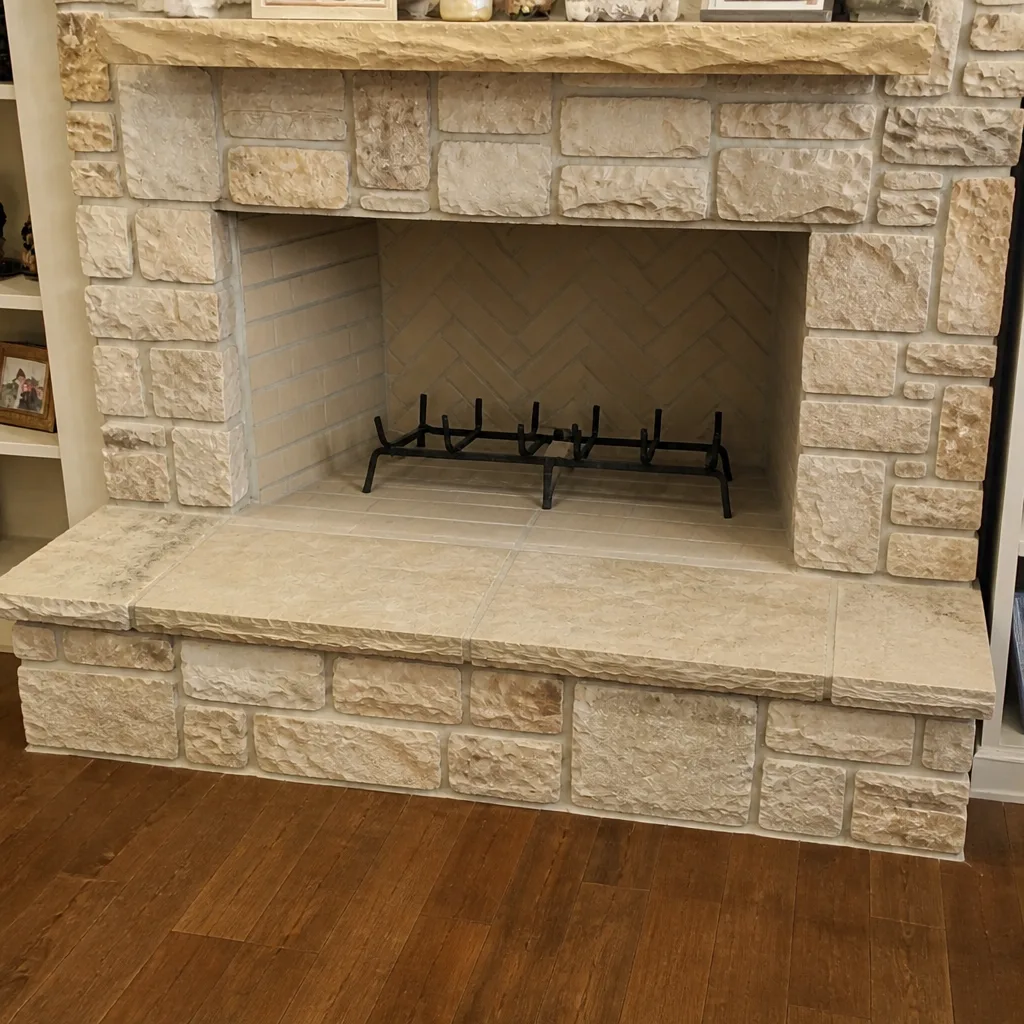
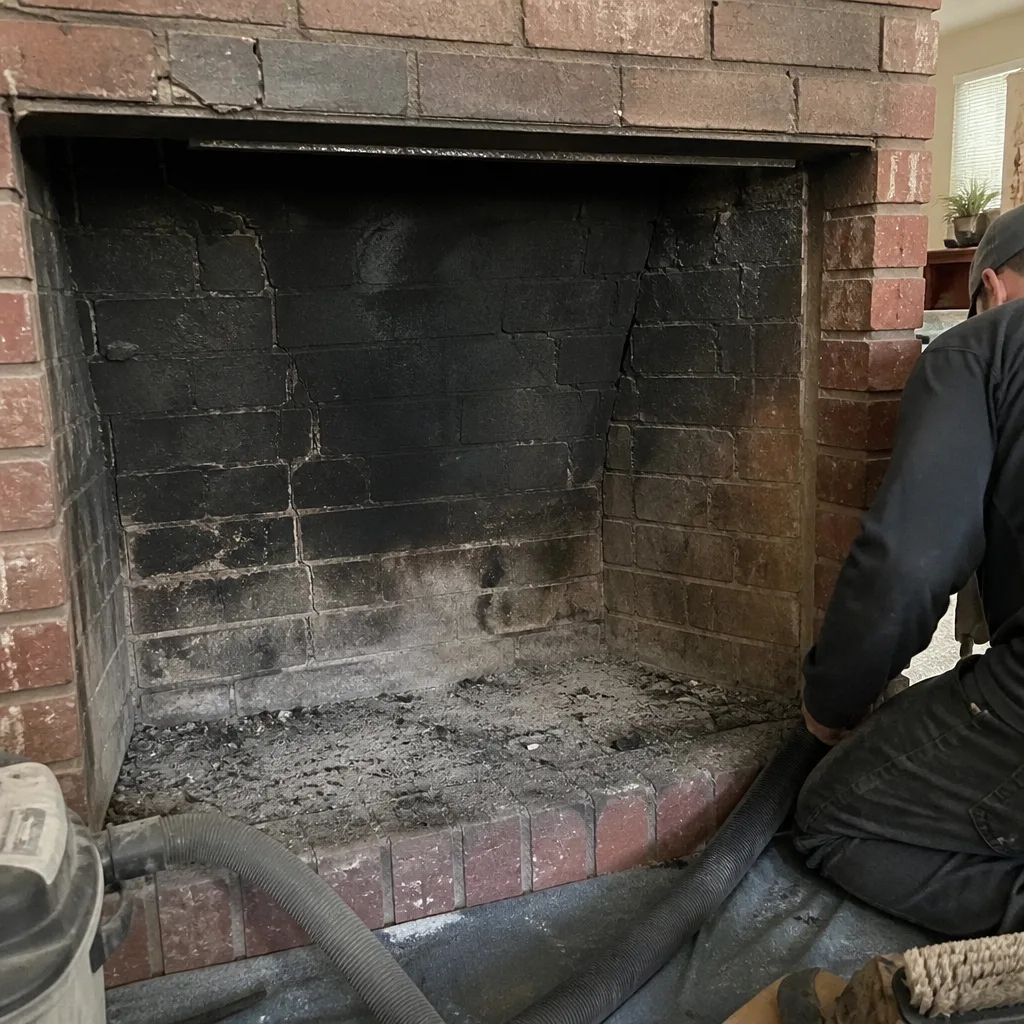
See the difference
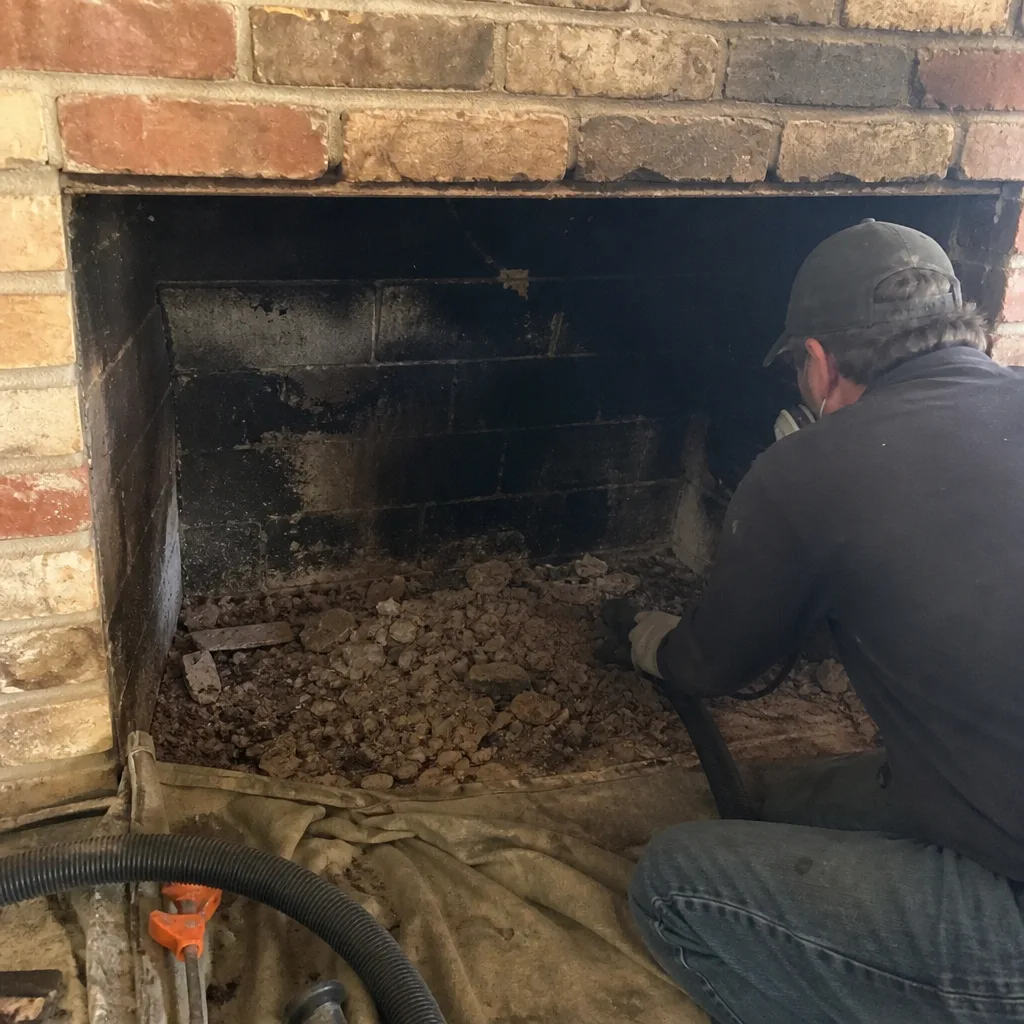 Before
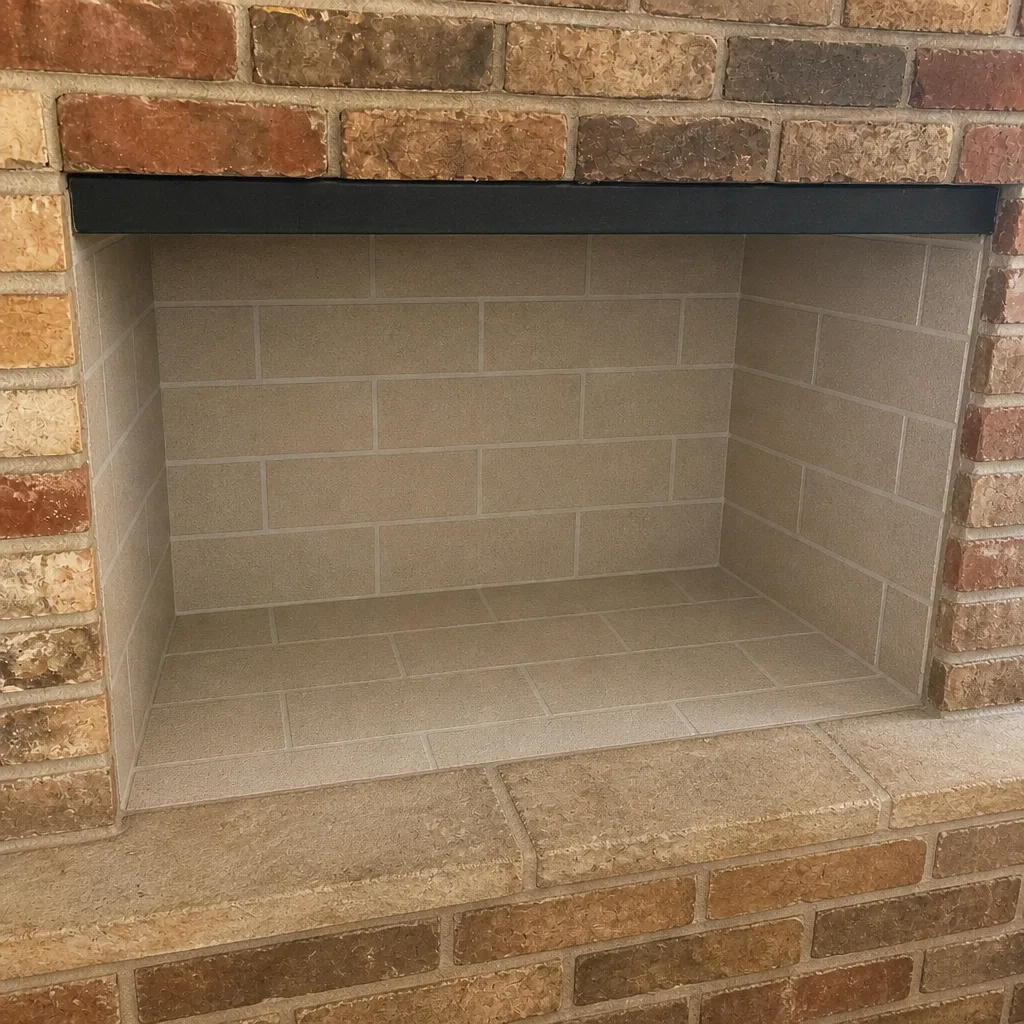 After
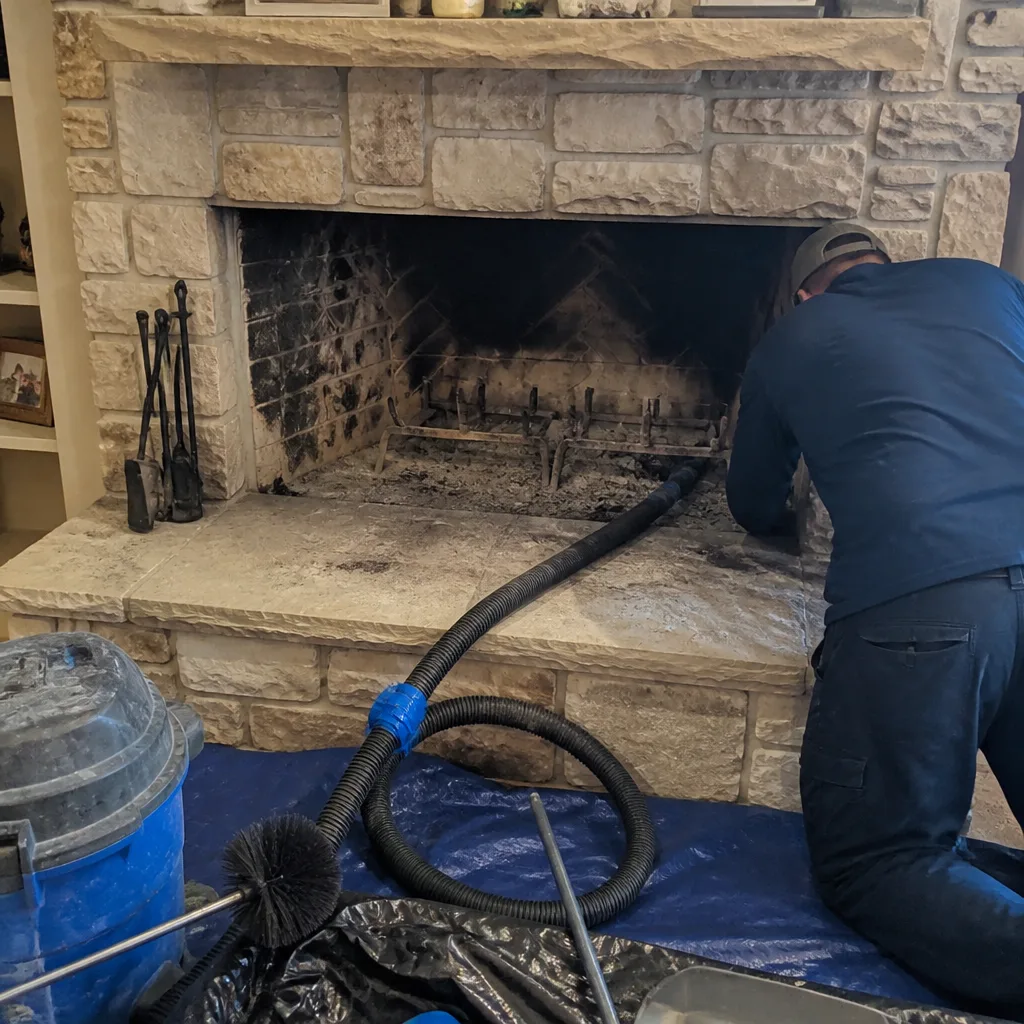 Before
 After
 Before
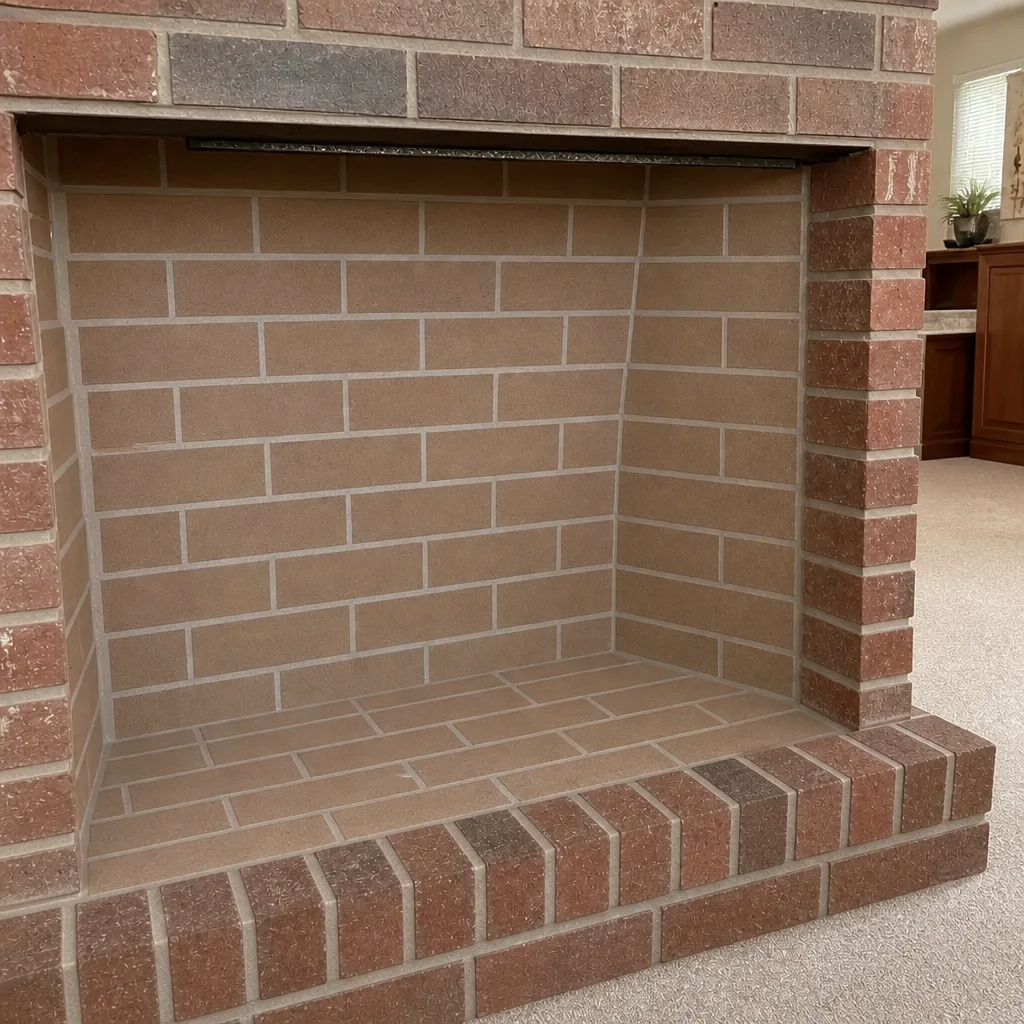 After
When to Call a Professional
Some warning signs are worth a call, and knowing which is which saves time and money. Call a professional if you see any of the same-week signs above: an off-odor from the flue, smoke rolling into the room consistently, rust or water staining inside the firebox, a missing or damaged cap or crown, or loose bricks in the stack. Call before you burn if you’ve moved into a Clear Lake home and don’t know the flue’s history. Call before listing or buying a house if you’re going through a real-estate inspection that will flag the chimney. Call if any of the quiet signs – efflorescence, spalling, rust – have appeared, even if nothing feels urgent yet.
Our technicians have up to 15 years of experience working chimneys and fireplaces specifically, and the local pro we connect you with is licensed and insured as the state requires. Nothing is recommended without camera evidence you can see yourself, and repairs that can safely wait are said so plainly. Chimney Sweep Clear Lake offers free estimates in Clear Lake – call (855) 726-7805.
Frequently Asked Questions
The most common early warning sign we see in Clear Lake is efflorescence – a white stain on the outside of the chimney that signals water intrusion. It’s easy to miss because it looks cosmetic, but it means a path for water has already opened. Call (855) 726-7805 for an inspection to find the source before interior damage starts.
Most chimneys should be swept once a year if they’re used regularly, and inspected annually even if they’re not. The right interval depends on how much you burn and how well the wood is seasoned. A quick inspection will tell you where yours sits. Call (855) 726-7805 to book one.
An asphalt or acetone smell from your flue usually points to stage 2 or stage 3 creosote, which is the hardened buildup that doesn’t brush off easily and is most associated with chimney fires. A professional inspection confirms the stage and the safe path forward. Call (855) 726-7805 to get it checked.
Yes, but not always. Smoke that rolls back can come from a cold flue, a creosote restriction, or a failed damper, and the fix is different for each. The timing tells you something: only on the first fire means draft; every fire means restriction or damper. Call (855) 726-7805 for a diagnosis before you burn again.
Not necessarily. Many warning signs point to crown or flashing repairs, cap replacement, or resurfacing rather than liner replacement. HeatShield resurfacing restores the flue’s interior without full demolition when the damage is in the right range, and it’s one of the reasons a thorough inspection matters. Call (855) 726-7805 for an assessment.
Creosote keeps building, water keeps finding its way in, and small masonry cracks keep growing. Nothing dramatic has to happen for the cost of repairs to go up between one season and the next. The right move is to schedule the inspection so you know what’s inside. Call (855) 726-7805 – estimates are free.
The Bottom Line
Chimney warning signs in Clear Lake rarely announce themselves dramatically. The ones that matter show up as a white stain, a flaking brick, a rust streak, or a smell that isn’t normal. They’re quiet, they’re easy to dismiss, and they appear a full season before a bigger problem does.
Learn to read them. Efflorescence means water moving through masonry. Spalling means the brick is failing. Rust means metal is failing. A sharp smell means creosote, likely at an advanced stage. Smoke rolling back means the flue isn’t pulling. Roofline damage you can spot with binoculars means the exterior is already giving. Sort each one by same-week or scheduled, and get the inspection that closes the gap between what you can see and what’s inside the flue.
Most of what goes wrong with a chimney is fixable, and it’s cheaper to fix early. That’s the whole value of knowing the signs.
Start with the answer to the question you can’t see yourself: what’s actually inside the flue? Chimney Sweep Clear Lake covers the full service arc – inspection, sweep, chimney cap & crown installation, fireplace repair, and structural chimney repair – with one specialist team. Contact us at (855) 726-7805 for a free estimate. We answer 24/7. Fast dispatch, 7am-7pm, Sunday through Friday.
Written by the team at Chimney Sweep Clear Lake.